
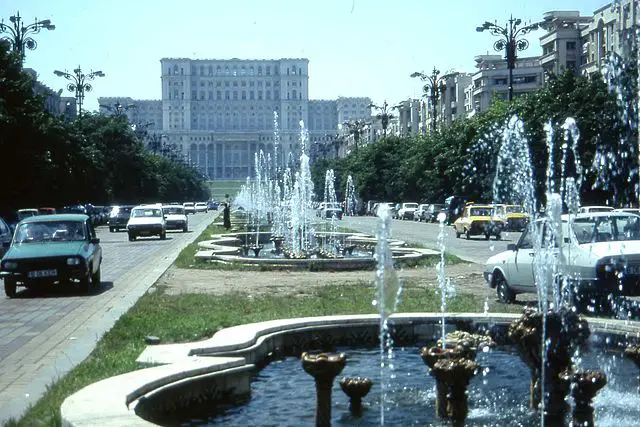
Bucharest is one of Europe’s most intriguing cities for those interested in communist history. Few capitals preserve such a dense concentration of architecture, propaganda landmarks, memorial places, and stories directly tied to the political machinery of a socialist dictatorship. From grand boulevards carved through the old city to secret police buildings, worker neighborhoods, elite residences, and the very square where the regime collapsed in 1989, Bucharest offers a rare opportunity to explore the physical traces of a system that shaped daily life for more than four decades.
And if you want to experience the city the way ordinary Romanians once did, consider taking part of this journey in a vintage Dacia 1300—a nostalgic ride through history in the car that defined an era.
This guide brings together 20 essential communist sites, accessible to any visitor who wants to understand Romania’s recent past. Some locations represent the height of megalomania and state power; others reveal the subtle ways propaganda shaped culture, identity, and everyday experience. All of them contribute a piece to the larger puzzle of what communism meant in Romania—and how the country transformed after its fall.
1. Palace of Parliament
The most famous communist landmark in Romania—and the world’s heaviest building. Built under Nicolae Ceaușescu as part of the massive “Civic Center” project, it symbolized the regime’s ambition, paranoia, and disregard for cost or human suffering. Tens of thousands were displaced to construct it, and entire neighborhoods were erased.
2. Antim Monastery
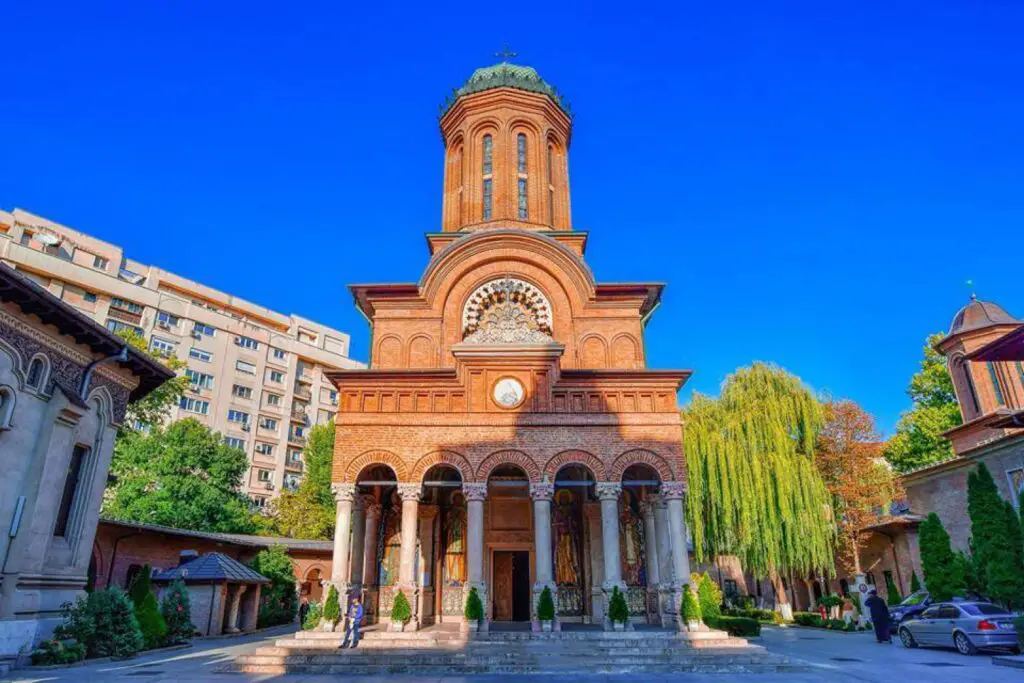
This 18th-century monastery was saved—at least partially—through a remarkable engineering effort: entire buildings were moved on rails to make room for Ceaușescu’s new boulevard. Its survival is a quiet but powerful reminder of the erasure and reconstruction strategies of the 1980s.
3. Bulevardul Unirii
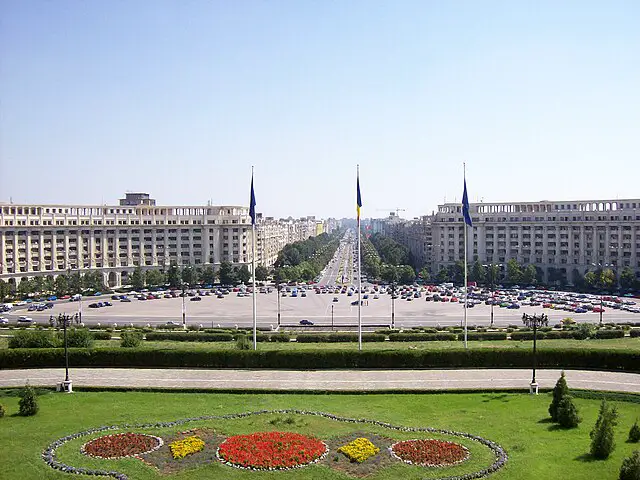
Ceaușescu’s answer to the Champs-Élysées: a monumental boulevard of oversized fountains, symmetrical apartment blocks, and rigid urban planning. Walking along it reveals the aesthetic of late socialism—uniform, monumental, and politically charged.
4. Museum of Communism
A modern, immersive museum offering reconstructed interiors, objects of daily life, propaganda materials, and sensory experiences: “communist coffee,” old-school snacks, and re-created apartments. A great stop to understand the emotional texture of the era.
5. Calea Victoriei
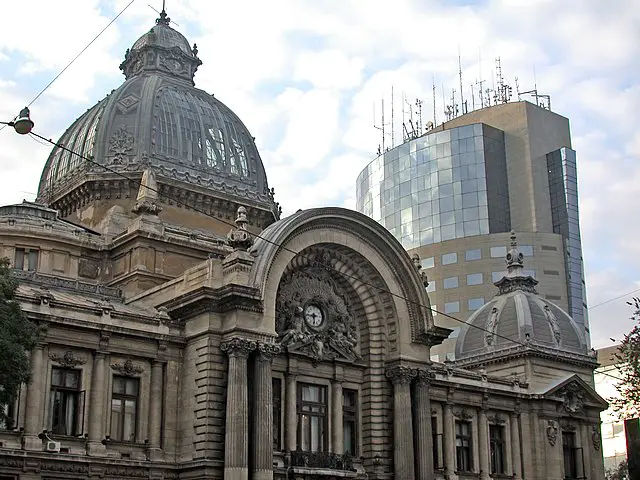
One of Bucharest’s oldest avenues, transformed during communism into a showcase route for parades, official events, and propaganda demonstrations. Along it you will find multiple institutions tied to the regime, including the Central Committee building at Revolution Square.
6. National History Museum of Romania
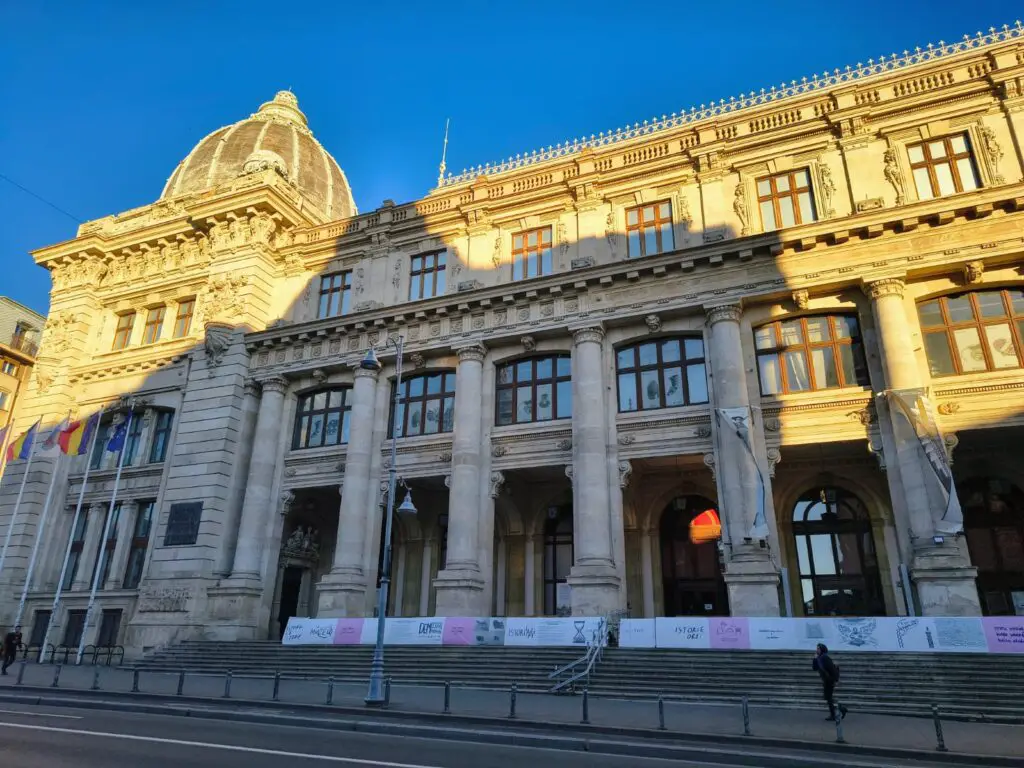
Inside, the permanent exhibits include sections on the 20th century and the evolution of the Romanian state—including communist-era propaganda, political symbols, and materials related to everyday life and industry.
7. University Square
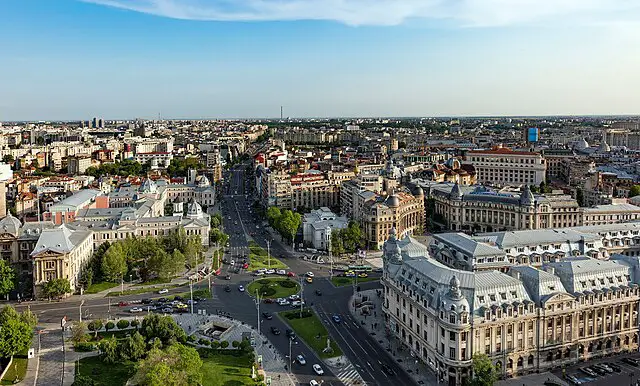
A symbolic space of resistance. Long before the 1989 Revolution, this square was associated with student activism and intellectual opposition. It became internationally known after the anti-communist protests of 1990, which demanded the removal of remaining communist structures.
8. Magheru Boulevard
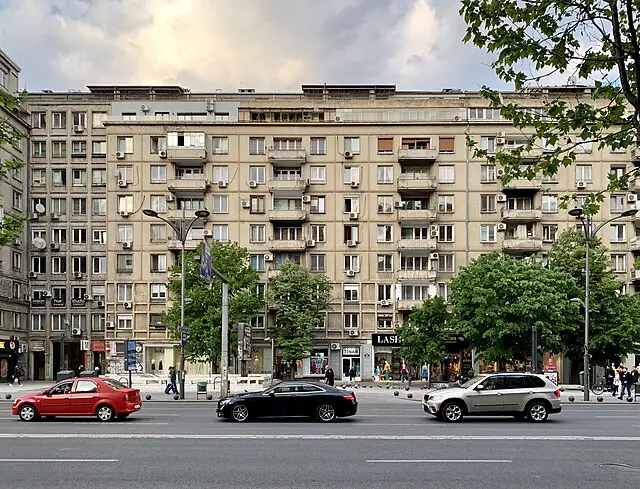
Once an elegant interwar boulevard, it became a model of socialist modernization: wide lanes, concrete facades, neon signs, and standardized functions. A walk here reveals how communism sought to redefine Bucharest as a “modern socialist metropolis.”
9. The Communist Cinemas of Magheru
Cinemas Scala, Patria, Studio and several others once served as cultural control centers. Here, the regime carefully curated film screenings, propaganda newsreels, and controlled access to Western cinema. Some still operate, offering a nostalgic glimpse of socialist-era architecture.
10. Revolution Square
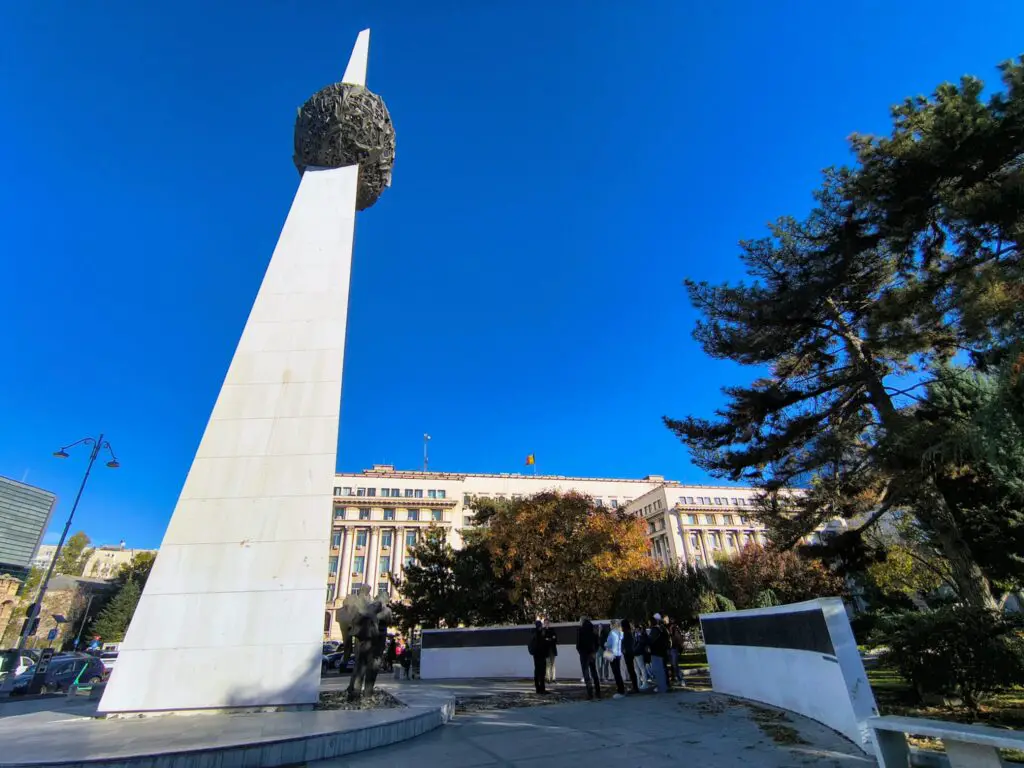
The heart of the 1989 Revolution. This is where Ceaușescu delivered his final speech, where protests erupted, and from where he fled by helicopter. Monuments around the square help contextualize the dramatic events that ended the regime.
11. The Mausoleum in Carol Park
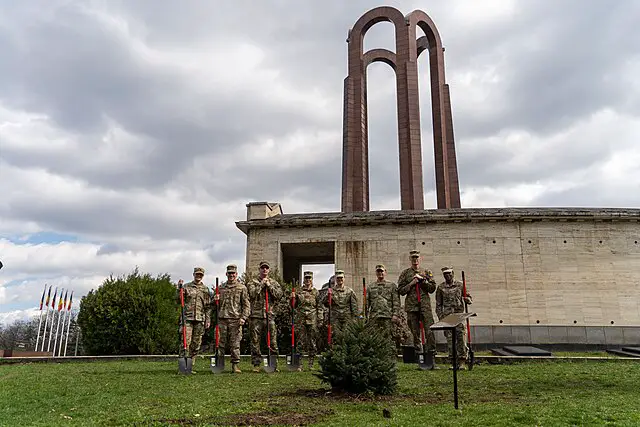
Originally built in 1963 as a pantheon for communist heroes, complete with eternal flame. After 1989, its symbolism changed dramatically. The structure itself remains one of the clearest examples of socialist monumental art.
12. Museum of the Romanian Peasant
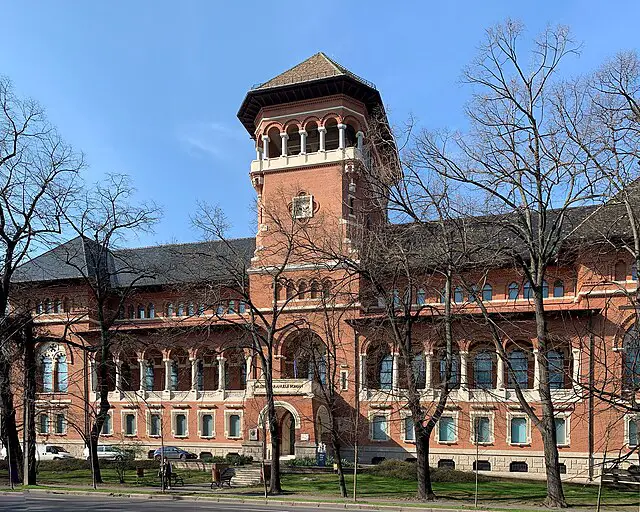
Surprisingly, this ethnographic museum occupies the former Museum of the Romanian Communist Party, repurposed after 1990. The contrast between communist ideology and the traditional rural life showcased inside speaks volumes about manufactured national identity.
13. Romanian Television Headquarters (TVR)
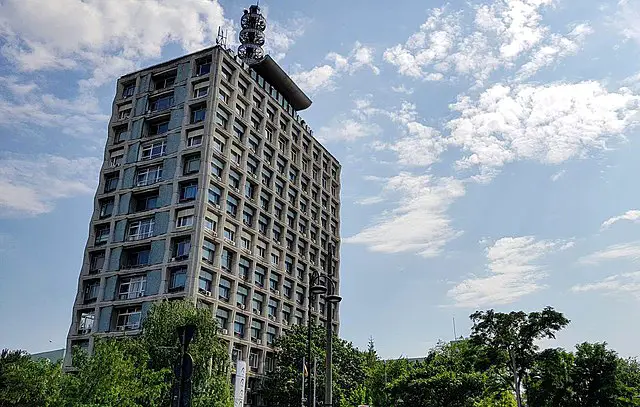
On December 22, 1989, this building became the first free television station in Eastern Europe to broadcast the fall of a communist regime—live. The chaotic footage from its studios marked the beginning of a new era.
14. Ceaușescu Mansion (Primăverii Palace)
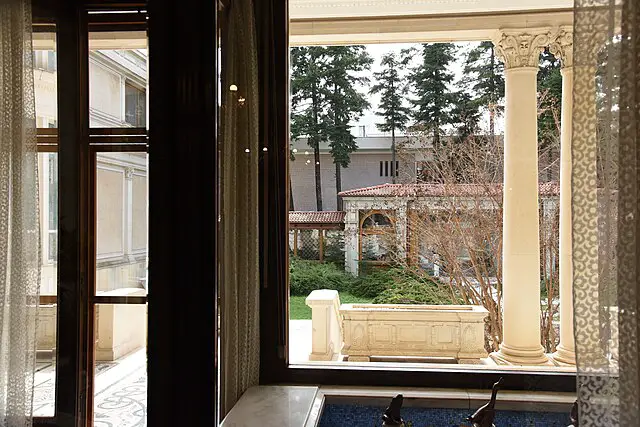
The private residence of Nicolae and Elena Ceaușescu, revealing an entirely different world from the rationed, austere lifestyle imposed on ordinary Romanians. Luxury finishes, imported goods, private theaters, and opulent décor all showcased the privileges of the ruling elite. The house can be visited only on guided tours with advance booking: https://casaceausescu.ro/en/buy-tickets/.
15. King Michael I Park (formerly Herăstrău Park)
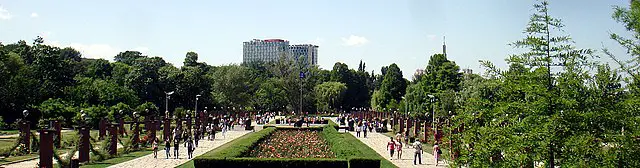
During communism, the park was used for mass events, “patriotic labor,” sports parades, and politically orchestrated gatherings. It also once hosted a massive statue of Stalin—removed in 1962.
16. Arch of Triumph & Kiseleff Boulevard
A parade axis used for military celebrations on August 23 (the communist National Day). The Arch itself can be visited, offering views over northern Bucharest.
17. Village Museum (Muzeul Satului)
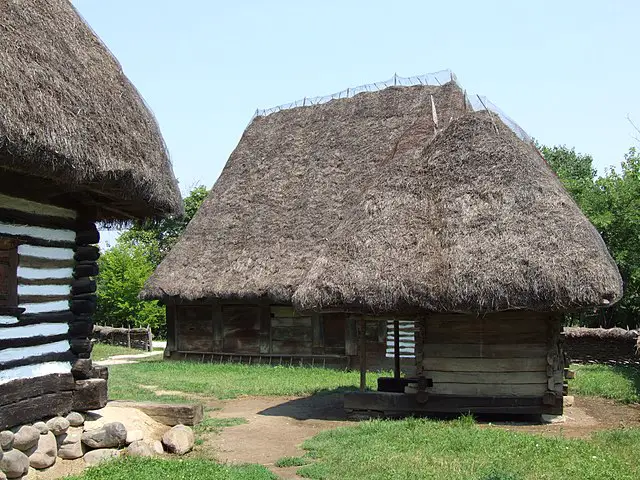
Set within the park, this open-air museum showcasing rural life was used by the regime to construct a nostalgic nationalist narrative—idealizing the peasantry while simultaneously pushing for aggressive urbanization and collectivization.
18. Casa Presei Libere (formerly Casa Scânteii)
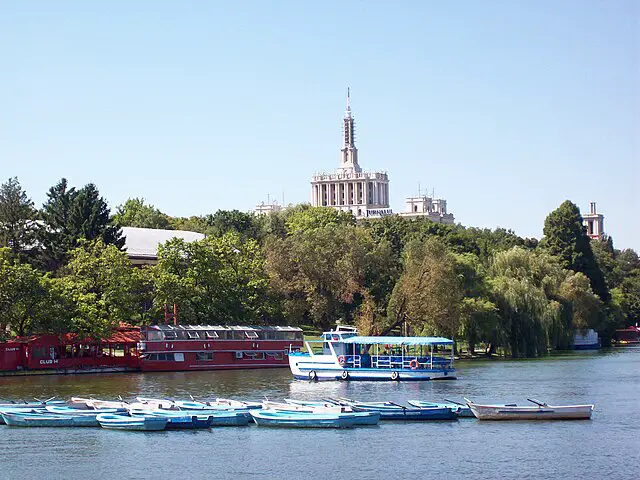
The iconic Stalinist building that once housed the Communist Party’s official newspapers, including Scânteia. From here, propaganda was coordinated, censored, and distributed nationwide.
19. The Tomb of Nicolae and Elena Ceaușescu (Ghencea Cemetery)
A surprisingly modest grave site visited by curious tourists and nostalgic elderly citizens. It reflects the rapid erasure of the cult of personality after 1989.
20. Casa Radio (The Unfinished Radio House)
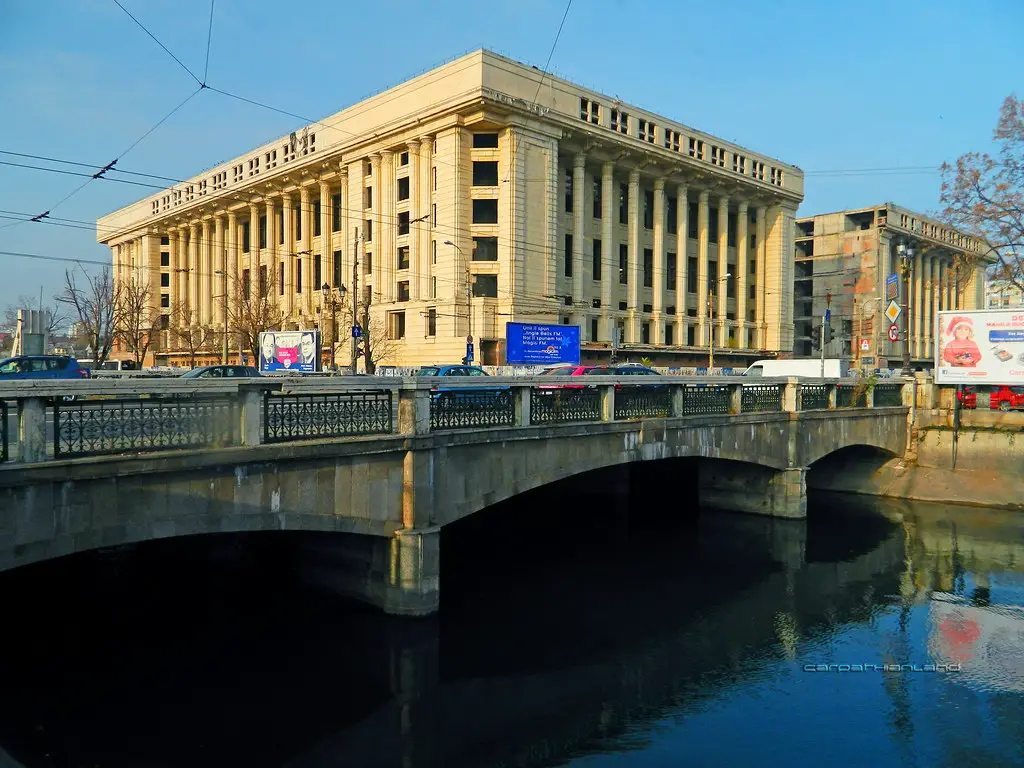
An abandoned giant of socialist architecture. Construction began in the 1980s but stopped during the Revolution, leaving behind one of Bucharest’s most haunting communist ruins.
Conclusions: Walking Through a Living Archive
Exploring Bucharest through its communist landmarks is less about architecture and more about understanding how a political system shaped an entire society. Every boulevard, factory, monument, and apartment block tells a story—of ambition, fear, resilience, propaganda, compromise, or quiet resistance. Some sites impress with their scale, others with their silence, and many remain woven into everyday life, used naturally by a city that has moved on even as the past lingers in concrete and memory.
For travelers, this journey offers a rare opportunity: to walk through a living archive, where history is not tucked away behind glass but rises around you in streets, buildings, and public spaces still inhabited today. Bucharest’s communist heritage is complex, often uncomfortable, sometimes surprising—but always revealing.
Whether you are drawn to political history, urban exploration, or the human stories behind these places, the city rewards curiosity at every step. And as you move between monumental structures and forgotten corners, you’ll discover a Bucharest that is far more layered and fascinating than first impressions suggest.
Travel With A Spin contains affiliate links. If you make a purchase through these links, I will earn a commission at no extra cost to you. Thanks for reading!

%20–%20Communist%20sites%20to%20visit%20in%20Bucharest)